
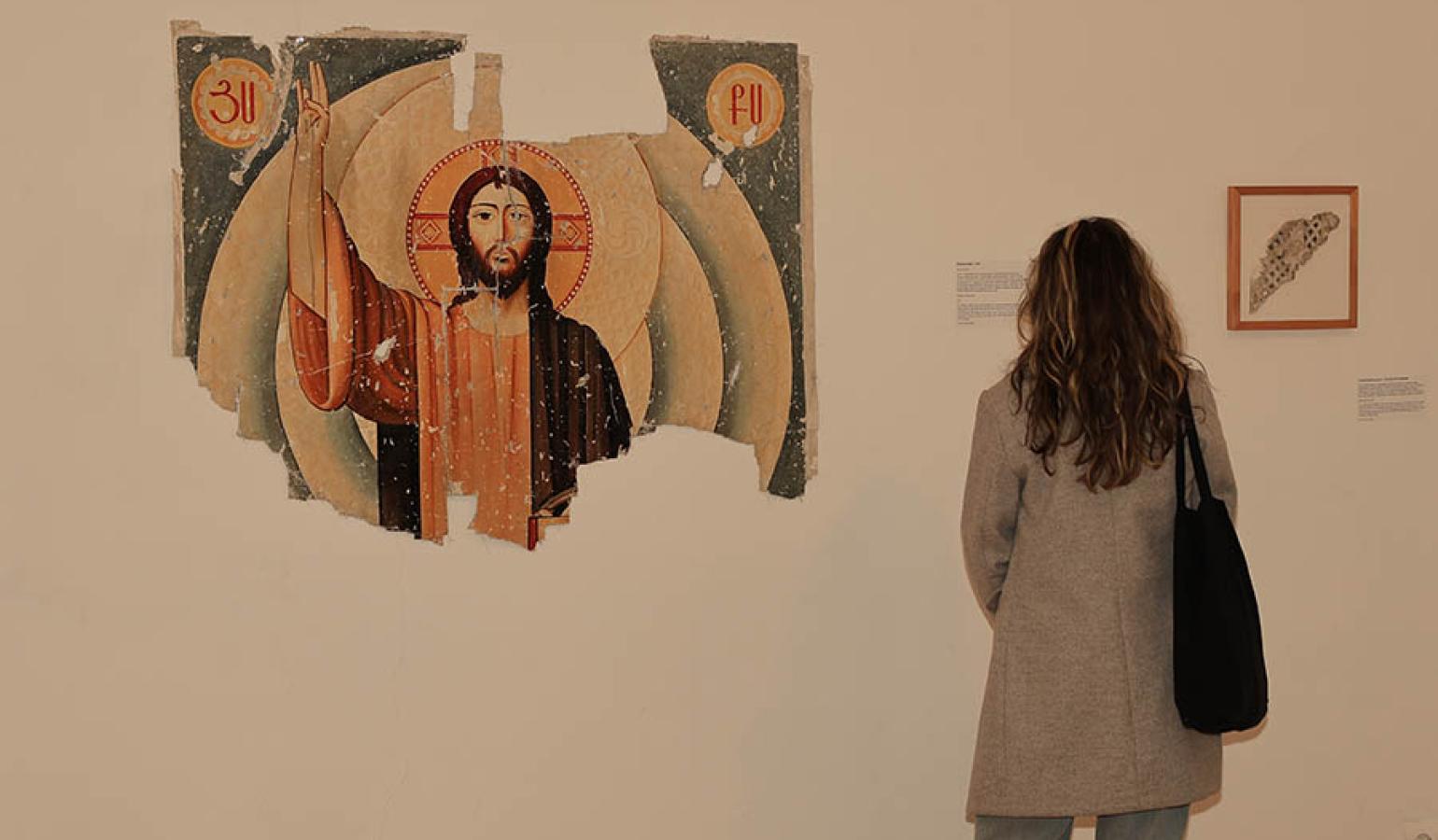
The exhibition “Mapping Loss,” initiated by the International and Comparative Law Center, opened on November 20, 2025, at the Center for Experimental and Innovative Art. The exhibition included photographs, video works, artistic creations, and personal belongings that presented the human experiences shaped by the 2020 Second Artsakh War and the large-scale displacement from Artsakh in 2023. The exhibition materials were viewed by visitors with great attention, accompanied by discussions and questions.
A high level of attendance was recorded on the opening day of the exhibition: from 18:30 to 21:00 the center hosted a large number of visitors, and in the following days the exhibition received an average of 15 - 20 visitors per day. On December 9, the day preceding the closing of the exhibition, a VR presentation of the cultural heritage of Artsakh was presented to visitors. The digitized materials had been scanned in 2020, immediately after the war, by TUMO, volunteers, and specialists of the ICONEM organization.
The “Mapping Loss” exhibition aimed to document the multilayered experience of loss and displacement by transforming individual memories into a map of collective memory. Through personal photographs, videos, handwritten notes, and everyday belongings of displaced persons, living testimonies of human rights violations were presented.
Each exhibit functioned as a coordinate point where individual stories intersected with broader historical, cultural, and legal contexts. The exhibition included both materials provided by displaced persons and works by contemporary artists who addressed the themes of war, displacement, and memory through the language of art.
The overall content of the exhibition highlighted systemic violations of human rights, particularly violations of the right to property, freedom of movement, the right to education, and cultural identity.
During the organization of the exhibition, the International and Comparative Law Center cooperated with the Armenian Legal Center for Justice and Human Rights, the Center for Experimental and Innovative Art, TUMO, and the Institute of Cultural Heritage of Armenia.